Festivals, celebrations and noisy periods can be very difficult for many dogs. Whilst some people see firecrackers as a one-off event, for dogs they can become a truly stressful experience.
Anxiety caused by firecrackers in dogs is more common than it seems and, in many cases, it is not simply a momentary discomfort. The loud, unpredictable and sudden noise can upset their emotional balance and make them feel insecure, disoriented or constantly on alert.
In this article, we explain why firecrackers affect dogs so much, what signs indicate that they’re having a hard time, and what you can do to help them feel calmer and safer during these moments.
Why do firecrackers affect dogs so much?
This is because dogs perceive their surroundings very differently from us. Their hearing is much more sensitive, which means that firecrackers, fireworks or sudden explosions affect them much more intensely. What may be nothing more than an annoying noise to a person can feel like a real and uncontrollable threat to them.
Furthermore, there are several factors that make them particularly vulnerable to this sort of situation. These are as follows:
- The sound is very loud and sudden: There is no clear warning sign to let them anticipate it, and that makes it all the more startling.
- They cannot identify where the danger is coming from: As they do not understand the source of the noise, many dogs enter a state of constant alertness that is very difficult to control.
- Their sense of routine and security is disrupted: When their environment becomes unpredictable, their stress levels rise.
- Every dog experiences it differently: Some dogs may be more sensitive due to their temperament, age, past experiences or lack of socialisation.
For this reason, a dog’s anxiety caused by fireworks should not be dismissed as an overreaction or a mere quirk. In many cases, it is a genuine fear response that should be addressed calmly and with the right tools.
Signs of anxiety or fear during the festive season
Not all dogs express fear in the same way. Some show very obvious signs, whilst others experience it more quietly. Knowing how to spot these changes is key to taking timely action and helping them more effectively.
The most common signs of anxiety in dogs caused by firecrackers include the following:
- Trembling or physical stiffness: This is one of the most common reactions when they feel afraid or insecure.
- Excessive panting even when it’s not hot: Panting can be a clear sign of stress.
- Attempts to hide or flee: Seeking shelter under furniture or in corners, or trying to escape, are typical behaviours.
- Barking, whining or more intense vocalisations: Some dogs express their nervousness in a more obvious way.
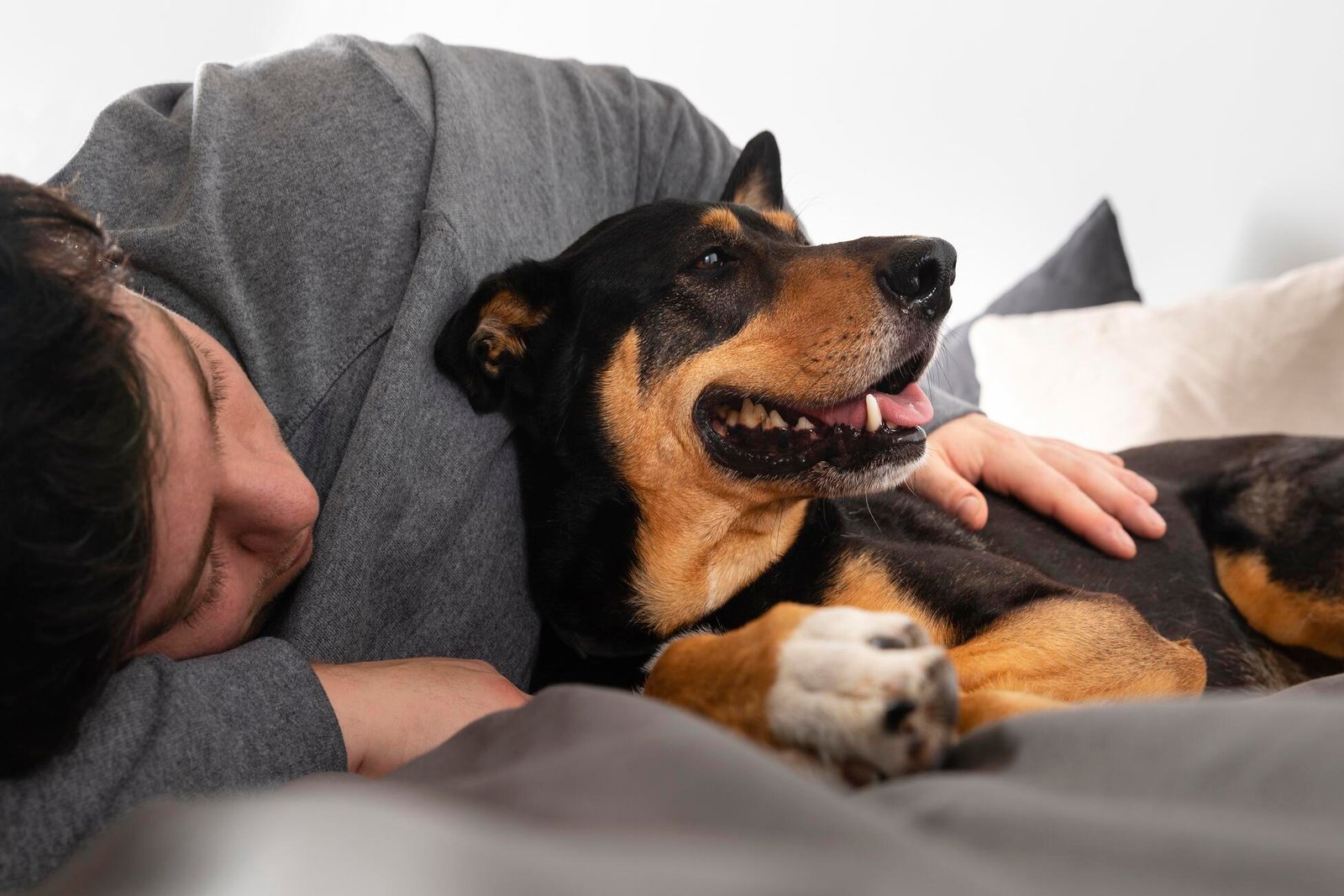
- Excessive clinginess or a constant need for contact: Others look to their carer as a source of security.
- Loss of appetite or difficulty relaxing: Even once the commotion has died down, some dogs take quite a while to recover.
All these signs may appear occasionally or recur whenever there are firecrackers, local festivals or fireworks. The important thing is not to wait until the problem gets worse before you start helping them.
How to help your dog relax when there’s a lot of noise
When a dog is distressed by firecrackers, the most important thing is to help them feel safe. You can’t always eliminate the noise, but you can minimise its impact and provide better support so that they can cope with the situation with less stress.
Here are a few tips that are often very helpful:
- Creating a safe space: A quiet area of the house, with their bed, blankets or a familiar object, can help them feel more secure.
- Close windows and reduce the impact of outside noise: Lowering the blinds, playing soft music or ambient noise can help to dampen some of the sound.
- Stay calm: Dogs pick up on our emotional state, so staying calm is more helpful than overreacting.
- Don’t force them to go outside or face the noise: If they want to hide or stay in a particular area, it’s best to respect that.
- Be prepared if you know there will be firecrackers or fireworks: Planning your routine in advance usually works better than only taking action once the problem has already started.
- Create positive associations wherever possible: In dogs with mild anxiety, small treats or pleasant routines can help reduce the emotional impact.
The key isn’t to force them to tough it out, but to offer support so that they feel supported and more at ease. In many cases, small changes to the way the environment is managed can make a big difference.
How we can help you at Quindus
At Quindus, we know that emotional wellbeing is also an important part of a dog’s health. That’s why, when we talk about dogs’ anxiety caused by fireworks, we don’t aim to force a reaction, but rather to offer natural support that helps promote a calmer state.
One of the options we offer for this type of situation is our Calming & Relax product, a natural chewable supplement designed to help dogs experiencing stress, anxiety or heightened sensitivity to stimuli such as firecrackers, fireworks, storms, travel or changes in routine. Its formula combines ingredients such as hemp seed, chamomile, L-tryptophan, melatonin, passion flower and Suntheanine, which work together to promote relaxation and emotional balance in dogs in a natural way.
Our product helps reduce anxiety and stress, promotes restful sleep, and is formulated to relax without causing excessive drowsiness – something particularly useful in situations where the dog needs to feel more secure without becoming completely lethargic. Furthermore, as it comes in chewable tablets with a natural meat flavour, it is easy to administer even to dogs that usually reject other forms of medication. The dosage is a guide based on weight, ranging from half a tablet daily for dogs under 5 kg to 8 tablets for dogs over 50 kg, and it is sold in a jar containing 90 chews (270 g).

Incorporating it into your dog’s routine can be a useful addition when you know a particularly noisy period is approaching, or when you notice that your dog needs a little extra support to cope better with such situations.
At Quindus, we are committed to natural, practical solutions that support dogs’ wellbeing through a respectful approach. Because helping them feel more relaxed is also a way of looking after them.
________________________________________________________________________________________________________________
In summary
Firework anxiety in dogs is a common problem at various times of the year and can have a significant impact on their well-being if not managed properly. Understanding why it occurs, recognising the signs early on and preparing the environment appropriately can make a world of difference.
What’s more, having some natural support at key moments can help your dog cope with these situations more calmly and confidently.
👉 Quindus can help you better support your dog during periods of fireworks, parties and loud noises.